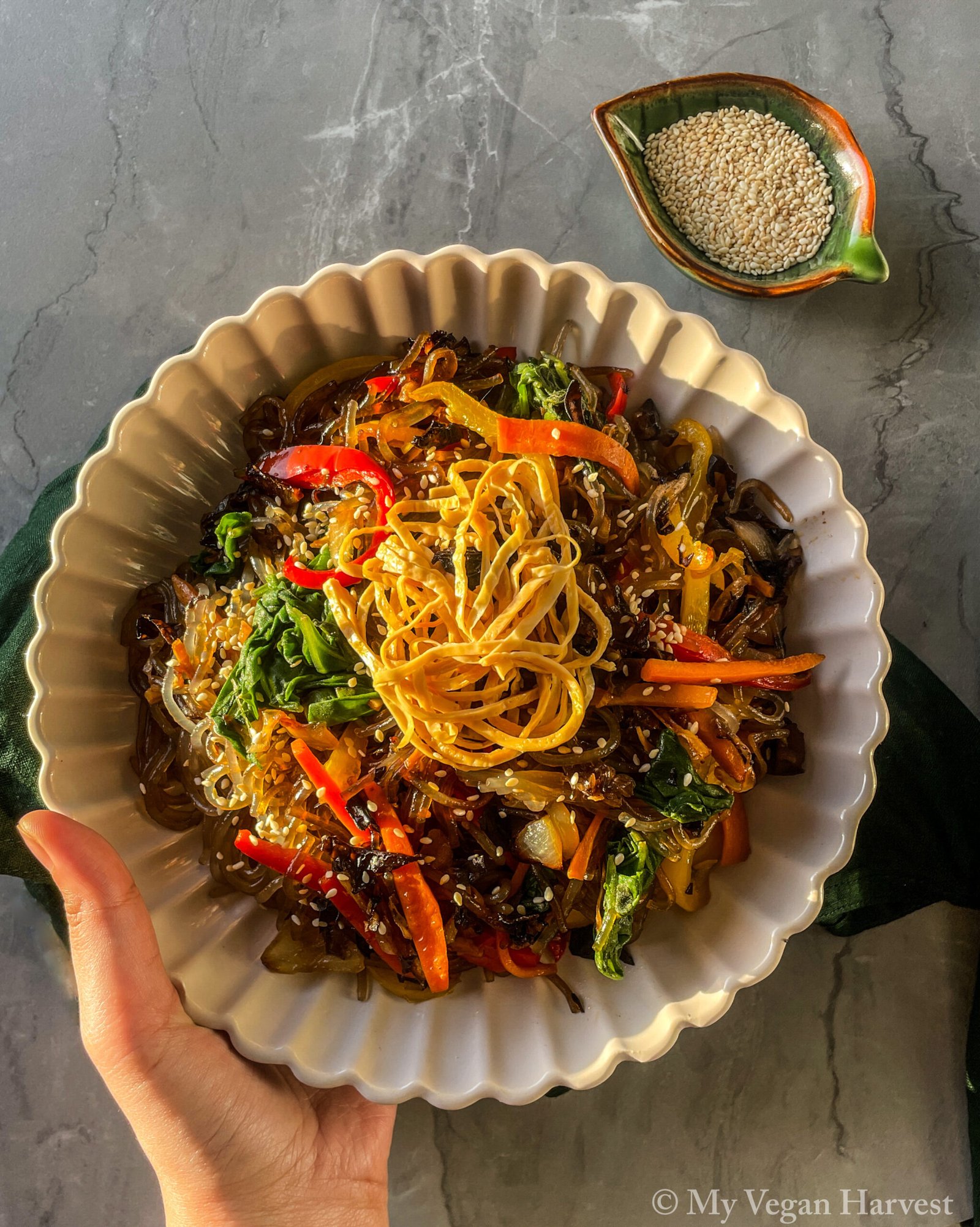
Delicious Vegan Japchae
Let me guide you through this post…
- What is Japchae?
- What Makes This Recipe Special
- Ingredient You Can Use For The Vegan Egg Garnish
- Recipe Card with Step-by-Step Guide
- Frequently Asked Questions
What is Japchae?
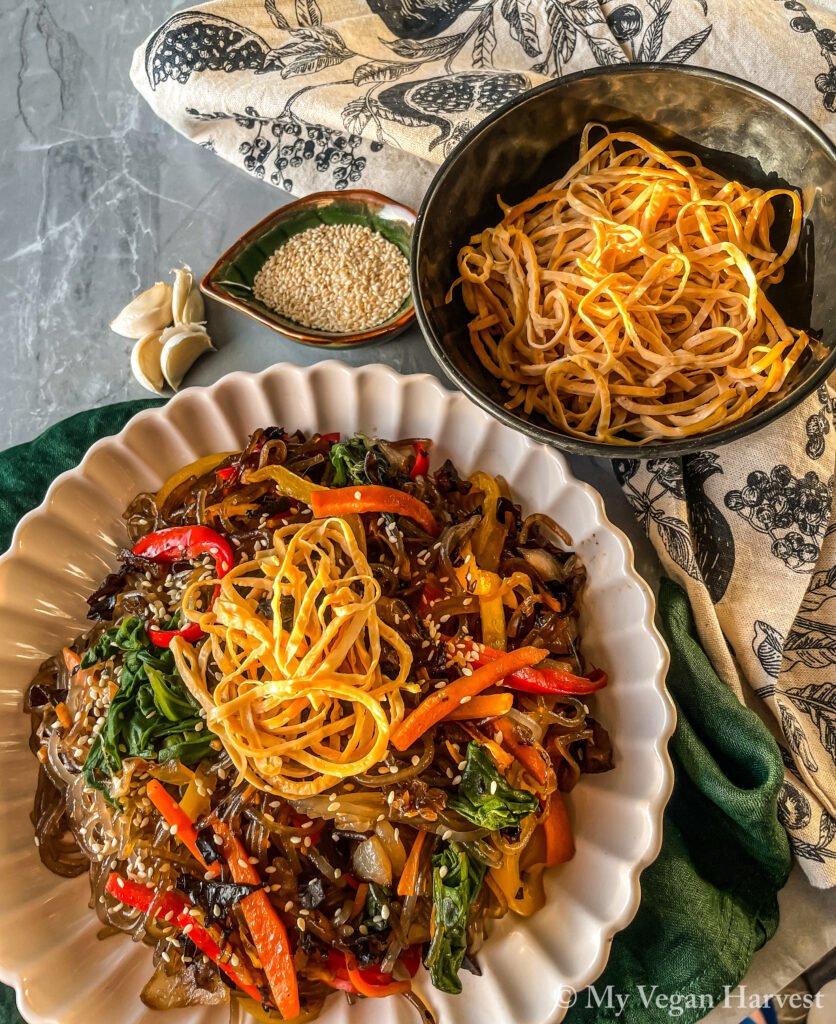
JAPCHAE or CHAPCHAE (Korean Glass Noodles With Stir-Fried Vegetables) is a sweet, delicious, and savory dish that will delight both the eyes and the palate with its chewy stir-fried potato starch glass noodles (dangmyeon) mixed with a gorgeous and colorful array of tender-crisp vegetables.
What Makes This Recipe Special
DID YOU KNOW? In the early 17th century, people considered japchae as a royal dish and it originally did not include any noodles. According to the Korea Tourism Organization (2017), cooks first created it for King Gwanghaegun’s palace banquet. The dish quickly gained prestige, and the royal family and other high-level officials enjoyed it as a luxurious dish.
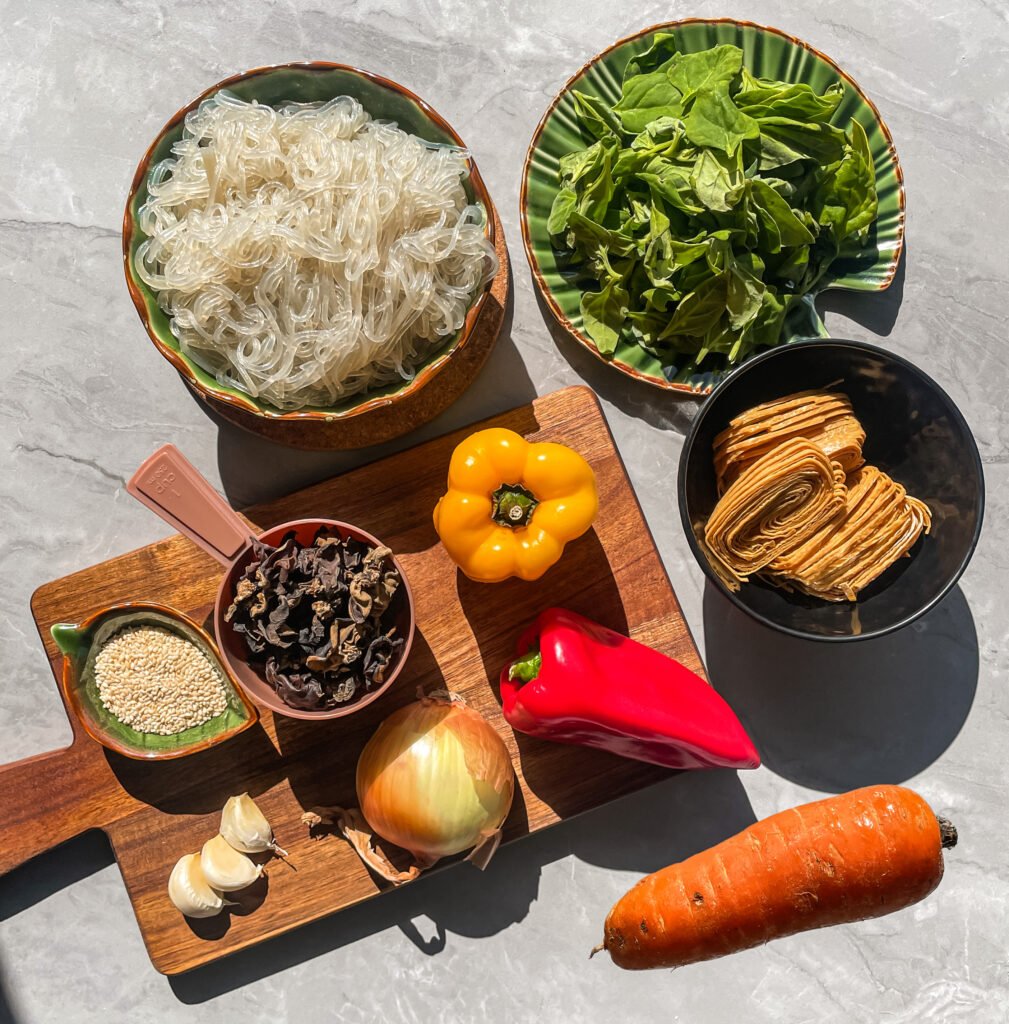
Today, japchae ranks as one of the most popular dishes in Korean cuisine. People traditionally cook it with potato starch glass noodles, stir-fried meat, mushrooms, and vegetables like carrots, onions, and spinach. Since then, the recipe has evolved, but the beauty of this dish remains the same.
Koreans often serve japchae during celebrations and festive holidays. But we can definitely enjoy it as an everyday dish. Although this recipe is vegan and therefore not traditional, the combination of flavors and ingredients in this is still incredibly good and will leave you craving more!
This is my go-to recipe when I’m cooking for my loved ones because it is so easy to prepare, has simple ingredients, and is a definite crowd-pleaser. I also discovered a secret ingredient for the classic vegan egg garnish (jidan) in traditional japchae!
Ingredient For The Vegan Egg garnish
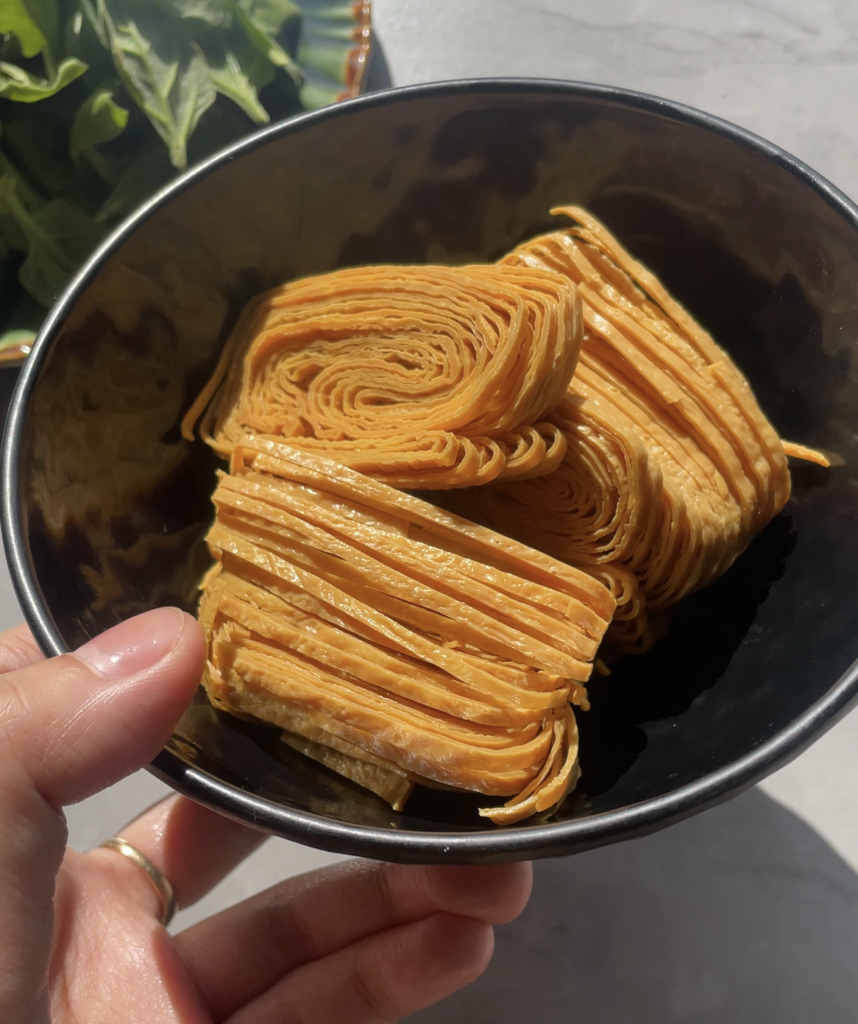
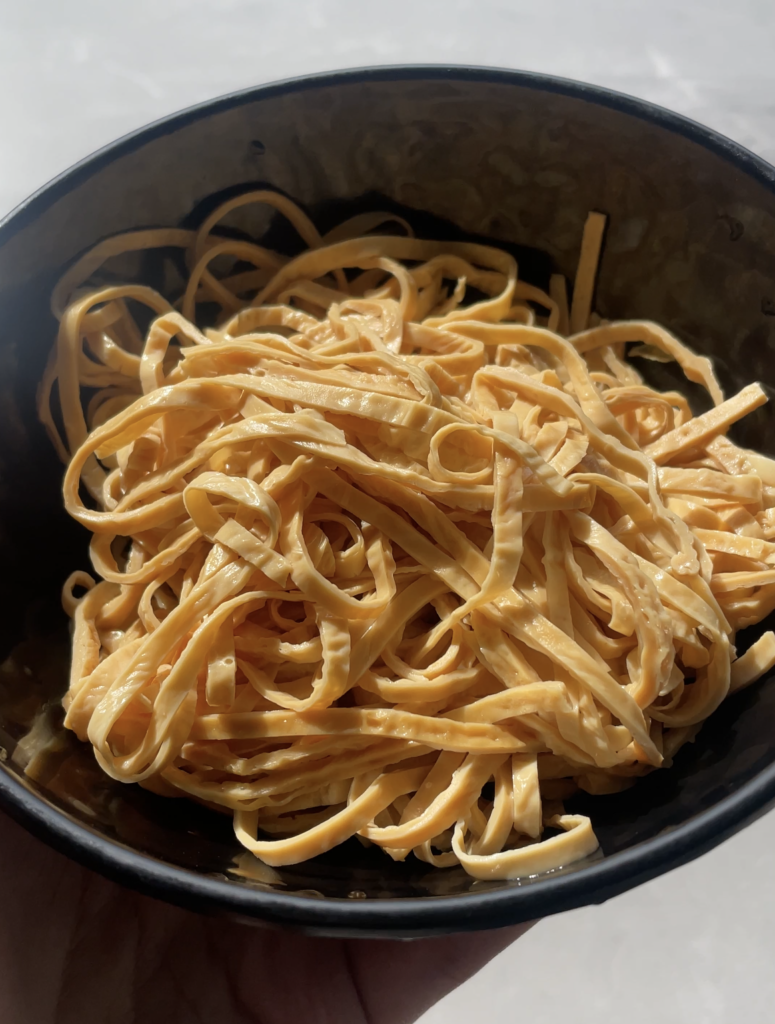
For the jidan or vegan egg garnish substitute, I used tofu skin. Tofu skin is a great source of plant-based protein. It contains approximately 44 to 50 grams of protein per 100 grams. So cool, right?
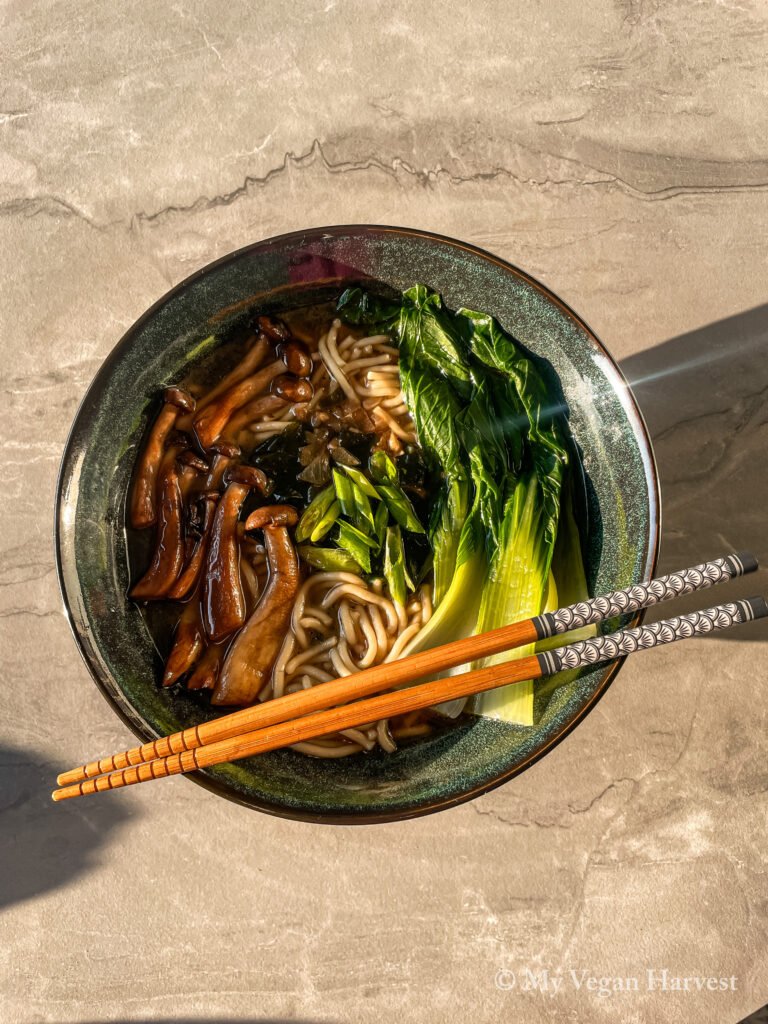
If you’re looking for more easy and simple noodle recipes, you’ll also love this Savory & Umami Mushroom Ramen Noodle Soup that is perfect for days when you just want a comforting embrace of coziness and warmth.
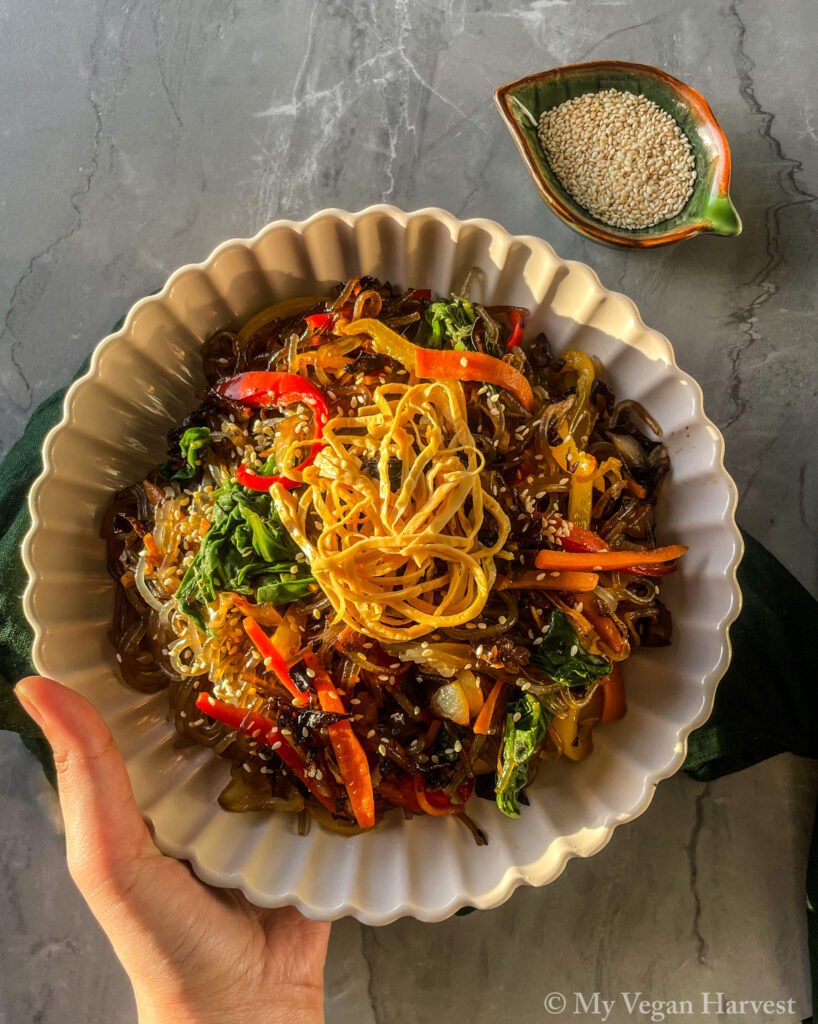
how to cook this delicious Vegan Japchae
Vegan Japchae (Korean Glass Noodles with Stir-Fried Vegetables)
Ingredients
Method
- Cook the dried black fungus in boiling water for 20 to 30 minutes (or until it has softened). Roughly chop into bite-size pieces. Set aside.
- For the jidan, cook the sliced tofu skin in boiling water for 10 minutes. Drain and let it cool. (TIP: You may add a pinch of black salt or kala namak to replicate the eggy taste). Set aside.
- Put the glass noodles into boiling water with a little salt and let it boil for at least 10 minutes (may vary according to packaging instructions). Once it is cooked, drain the noodles and mix with a tablespoon of sesame oil and a pinch of salt. Set aside in a bowl.
- To blanch the spinach, bring a pot of water to boil. Cook the spinach in the boiling water for 30 seconds. Once it has wilted and has turned into a bright green color, remove it with a slotted spoon and submerge it into a bowl with ice and water for at least 1 minute then drain (this step helps preserve its bright color and texture). Drain and gently squeeze out the excess water from the spinach. Set aside.
- Mince the garlic. Thinly slice the onion. Slice the carrot and bell peppers into julienne strips.
- In a small and dry frying pan, toast the white sesame seeds until it turns fragrant and golden in color. Let it cool and set aside. Now we are ready to start cooking japchae! YAY!
- In a large non-stick pan, sauté the garlic and sweet onion with oil until it is aromatic. Add the wood ear mushrooms and stir fry for at least 2 minutes over medium heat.
- Add the strips of carrot and bell peppers into the pan and stir fry for a few minutes, but be careful not to overcook it. We want the vegetables to be cooked with a tender-crisp texture.
- Add the noodles into the pan and mix in with the sauce and other ingredients (spinach and tofu skin).
- Serve hot on a plate and garnish with the sliced tofu skin and toasted white sesame seeds.
Notes
- For the jidan or vegan egg garnish substitute, I used tofu skin. Tofu skin is a great source of plant-based protein. It contains approximately 44 to 50 grams of protein per 100 grams. So cool, right?
- Using a high-quality toasted sesame oil is important to achieve the best nutty flavor. If your sesame oil is blended with soybean oil, it is still fine to use.
Historical Info Reference: Korea Tourism Organization. (2017, February 21). Exploring Korea’s true flavor. https://web.archive.org/web/20170319034327/https://korea.stripes.com/news/exploring-korea%E2%80%99s-true-flavor#sthash.js8IWn0c.dpbs
Frequently Asked Questions (FAQs)
Is Japchae served hot or cold?
It is best served warm, but it is just as good when eaten cold.
What does it taste like?
It has a savory, slightly sweet, and nutty flavor from the toasted sesame oil and sesame seeds.
Is it a main dish or a side dish?
It can be both! It is commonly served as a banchan (Korean side dish), but it can also be a main dish when served over a bed of steamed white rice (Japchae-bap).
Is Japchae gluten-free?
Sweet potato starch noodles are naturally gluten-free. However, most traditional soy sauce contains wheat. To make it 100% gluten-free, use a gluten-free soy sauce or Tamari.
How long does it last in the fridge?
It can be stored in an airtight container for up to 4 days.
Preparation & Cooking Tips
Do I need a wok to cook japchae?
No. A large non-stick pan works just as well.
How do I prevent the noodles from sticking?
Rinse the boiled noodles to remove excess starch. Toss the noodles with a little sesame oil to prevent from sticking.
Do I have to cook everything separately?
Traditionally, each ingredient is stir-fried separately to keep its distinct flavor, color, and texture. For a quicker and home-style version, you can cook them in the same pan.
What is the best way to make it?
Using a high-quality toasted sesame oil is important to achieve the best nutty flavor. If your sesame oil is blended with soybean oil, it is still fine to use.